
Table Of Contents
Anthropic has rolled out Claude Cowork, a new AI-powered tool designed to help everyday users manage files, documents, and folders using artificial intelligence. Released as a macOS-only research preview, Cowork represents a major shift in how AI assistants are positioned. Instead of limiting advanced automation to developers, Anthropic is now offering file-manipulation capabilities to non-technical users willing to pay for its premium Claude Max subscription, priced between $100 and $200 per month.
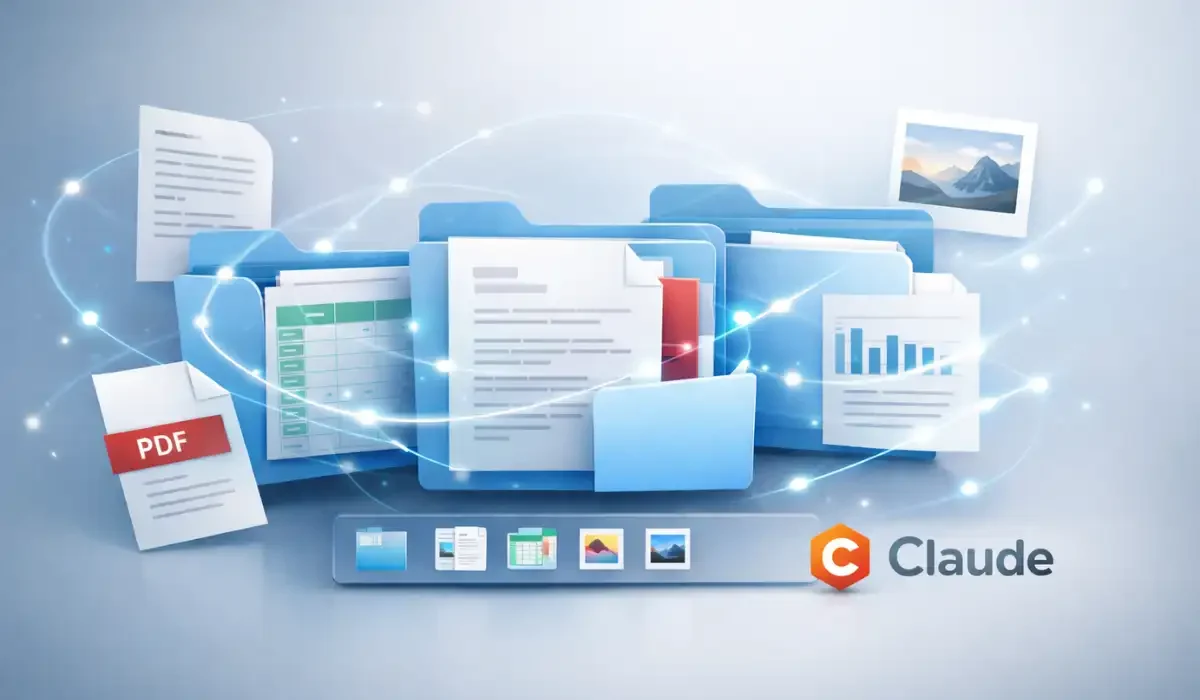
At its core, Claude Cowork allows users to give an AI agent controlled access to specific folders on their computer. Within those folders, the AI can read files, organize content, create new documents, summarize large datasets, or restructure messy information into something usable. Anthropic describes the tool as a way for regular users to complete complex, time-consuming tasks without writing a single line of code.
From Coding Assistant to General Helper
Claude Cowork is built on the same foundation as Claude Code, a terminal-based tool Anthropic originally launched for software engineers. While Claude Code required technical knowledge and command-line skills, Cowork removes those barriers entirely. The interface is simplified, folder access is configured automatically, and users interact with the AI through natural language rather than code.
The idea for Cowork came from unexpected user behavior. Anthropic noticed that many developers were already using Claude Code for non-coding tasks. People were organizing vacation research, cleaning up inboxes, analyzing documents, recovering lost photos, and even managing household projects. These creative uses revealed a broader demand for AI that could work directly with files, not just text prompts.
One early experiment highlighted Cowork’s potential. A tech analyst uploaded hundreds of podcast transcripts into the tool and asked it to extract recurring themes and insights. Within minutes, Cowork delivered structured analysis that would normally take a human researcher days to complete. For knowledge workers, content creators, and researchers, this kind of capability is extremely appealing.
Built at AI Speed
Perhaps the most surprising detail behind Cowork is how quickly it was created. According to Anthropic engineers, the entire feature was built in just ten days, with all of the code written by Claude Code itself. In other words, the AI helped build the next generation of its own tooling.
This kind of recursive development dramatically accelerates innovation, but it also raises concerns. Traditional software development leaves room for security reviews and extensive testing. When features are built in days rather than months, the risk is that safety and security lag behind capability.
Clear Warnings About Real Risks
Anthropic has been unusually transparent about those risks. The company explicitly warns users that Claude Cowork can take destructive actions, including deleting files, if it is instructed to do so. Even more concerning is the threat of prompt injection attacks, where hidden instructions inside documents or webpages can manipulate the AI into acting against the user’s interests.
In simple terms, a malicious file could tell the AI to copy sensitive data, alter documents, or erase content, all without the user realizing what triggered the action. Anthropic admits that while it has built defenses against these attacks, AI agent safety is still an unsolved problem across the industry.
Critics argue that asking everyday users to spot suspicious AI behavior places too much responsibility on people who may not understand how these attacks work. For now, using Cowork requires a level of trust and caution that goes beyond most consumer software.
Sandboxing as a Safety Net
To reduce potential damage, Cowork runs inside a sandboxed environment on macOS using Apple’s virtualization technology. This setup restricts the AI’s access to only the folders users explicitly approve, preventing it from interacting with the rest of the operating system.
While this approach limits how much harm the AI can do, it does not eliminate risk entirely. If sensitive files live inside an approved folder, they are still vulnerable to mistakes or malicious instructions. Sandboxing narrows the scope of damage but does not fully solve the underlying security challenge.
A Different Path From Enterprise AI
Claude Cowork enters a market already crowded with AI productivity tools, especially in enterprise environments where large companies have widely adopted AI assistants. Anthropic, however, appears to be taking a different path. Rather than targeting businesses at scale, it is testing advanced agent capabilities with a smaller group of premium consumers.
The macOS-only release, high price point, and research preview label all suggest a cautious rollout. By limiting access, Anthropic can observe how real users interact with file-manipulating AI and gather feedback before expanding availability. Windows support has been mentioned but no timeline has been confirmed.
Promise Meets Uncertainty
Claude Cowork shows just how powerful AI agents are becoming. The ability to turn chaotic folders of documents, transcripts, and notes into organized, usable outputs is a clear productivity breakthrough. At the same time, the tool exposes unresolved safety issues that grow more serious as AI gains greater autonomy.
For early adopters, Cowork is both an opportunity and a risk. Anthropic has been clear that the product is experimental and not fully secured. Whether it becomes a model for the future of personal AI assistants or a warning about moving too fast will depend on what happens during this research preview phase.
