
Table Of Contents
The world is now talking about the changes that are expected to be implemented by the satellite internet constellation, Starlink. Most probably, these will get implemented by the next year, 2026. The third-generation satellites of Starlink will be responsible for the imminent changes that are expected. This is highly likely to enhance the features such as speed, latency, and capacity of the network. A more sophisticated internal technology and lower orbits will facilitate the changes that are mentioned above. Advanced modems are being equipped for these improvements. In this article, you will get to know more about the changes of Starlink Gen-3 Satellites in the coming year within a structured framework.
What is Starlink and How Does it Work?
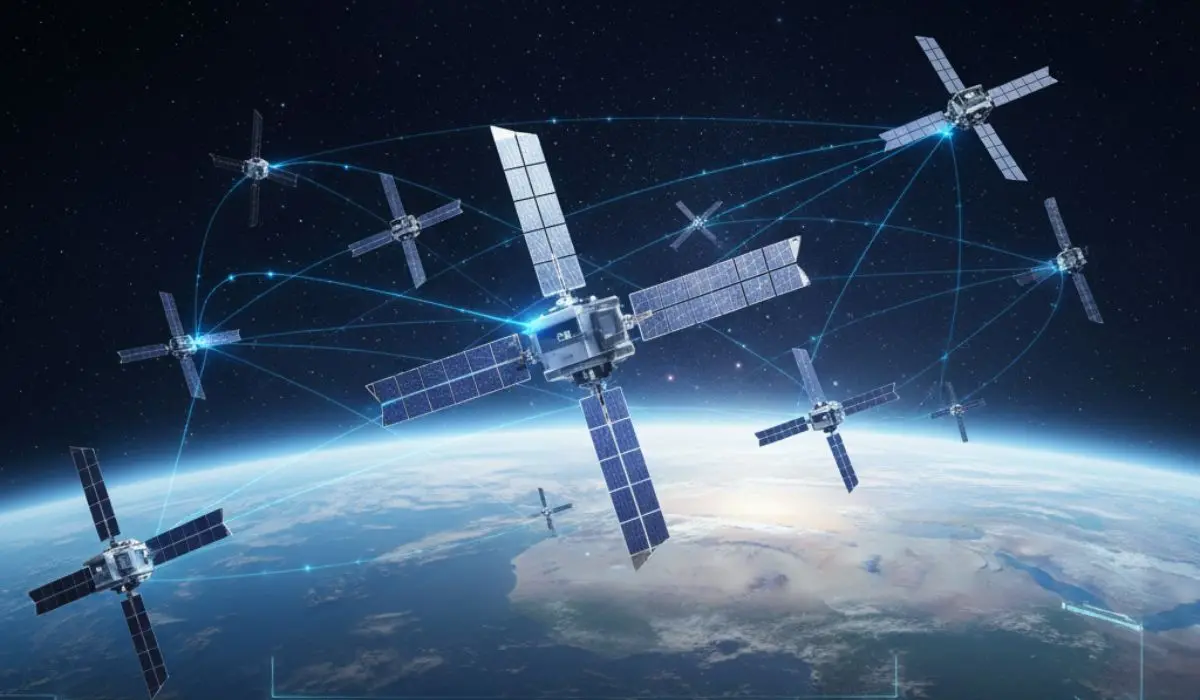
As we have previously mentioned in this article, Starlink Gen 3 is a satellite internet constellation powered by SpaceX. Low-latency and high-speed broadband internet connections are the unique selling points promised by Starlink. This is made possible through a network of satellites that are functioning in the Low Earth Orbit (LEO). Another unique feature of Starlink is that this network of satellites does not need to depend on the ground infrastructure, unlike other satellite networks out there. With the help of this feature, this network is able to serve a wide range of geographical areas, even the remote ones, with high-quality internet services.
In the following section, we will be discussing the factors that contribute to the functioning of this network, which will give you insights into the working mechanism of Starlink.
1. LEO Satelite
Here, a lot of smaller satellites will be deployed to the lower Earth orbit, in order to make a large network of satellites. These Low Earth Orbit satellites help in the smooth functioning of the network, assuring high quality and speed.
2. User Terminal
This element, belonging to the working mechanism of the satellite network, is positioned at the end of the users, as the name suggests. This is basically how the users are able to connect to the network. It is made possible using a small dish-shaped terminal. However, it is quite important to make sure that this terminal has a clear vision of the sky for better reception of the signals sent by the satellites.
3. Direct Communication
It is through this step that the satellites receive and send the internet data to the users. Here, the communication between the satellites and the dish would be quite direct.
4. Global Network
This is where the enhanced number of satellites comes into play. Even if one satellite fails in connecting, some other satellite comes and takes over for the connection, ensuring communication efficiency, which is the fundamental requirement of a network.
What will Change in 2026?
Now that you have gone through everything essential about Starlink Gen 2. Here in this section, we will be pointing out the changes that are to be expected in the next year. Apart from just pointing it out, we will be giving you deeper insights so that you will be able to make that clear connection with the working mechanism and the changes that are to be expected quite soon.
1. High Speed and Better Capacity
These features have already been discussed in the article, and you might have known that it is the deployment of multiple satellites in the Lower Earth Orbit that is responsible for this advancement. When we compare the upcoming Starlink Gen 3 satellites to the current Gen 2 version, it is expected to show 10 times more download capacity and 24 times more upload capacity. Currently, the 1 Gigabit download speed can also be enhanced to a limit of 2 Gigabits.
2. Lower Latency
Currently, the Starlink Gen 2 Satellites are operating at an altitude of 550 km, and this might be reduced to a limit of 350 km. This can reduce the latency remarkably, again enhancing the speed aspect of the network.
3. Edgy Hardware
Edgy hardware is also something to look forward to when SpaceX makes its transition from the current Starlink Gen 2 to Starlink Gen 3. Technological advancements made in the hardware part can really help in moulding out the futuristic computers, modems, beamforming, and switching systems of the network.
4. Larger Starship Integration
In order to implement all the expected advancements that we have mentioned above in this article, it is important that the firm seek the assistance of the Starships for every launch. With every launch of the satellite and starship, the capacity of the network can also be enhanced, up to a mark of 60 Tbps.
5. Increased Satellite Density
In the lower orbits, we will be able to spot a larger number of satellites when compared to the previous generation. This is because the newer satellites deployed in this generation will have the ability to cover only a smaller geographical area. Hence, in order to cover the entire geographical area, more satellites would be needed in the lower orbits of the Earth. This will, in turn, lead to an increase in the satellite density for sure.
Challenges in the Starlink Gen 3
Even if the advancements sound more promising and advanced when compared to the previous generation, it is important that you get aware of the challenges involved in this improvement. The increased number of satellites in the lower orbits of the Earth is expected to have a lower life span. Hence, SpaceX would be required to replace it more often than the Gen 2, making the maintenance side quite harder.
Regulatory hurdles would be the next challenge in this regard. Agencies like the FCC have started to express their concerns regarding the interference of the system with other space systems. If SpaceX fails to convince them with the valid explanations, the expected changes might not be in full swing for sure.
Since the working mechanism of the Gen 3 network would be highly dependent on the Starship, if they fail to function properly, it can consequently affect the performance quality of the network. Hence, it is important that SpaceX takes good care of all these challenges in order to perform in the way that they have promised with the deployment of these next-generation satellites. Similarly in 2024, SpaceX has added 20+ starlink internet satellites, as a plan for their expansion.
Conclusion
Now that you might have gained a clear picture of the changes that are to be expected with the deployment of Starlink Gen 3 Satellites. Taking into consideration the beginners who might be reading this article, we have also included the fundamental information regarding SpaceX and Starlink. We have given information about the working mechanisms facilitating the functioning of the network, which will definitely bring you more clarity about the changes that have been discussed later in the article. Apart from all these, we have also discussed a couple of challenges that are to be expected with the implementation of all-new Gen 3 Starlink Satellites by SpaceX.
